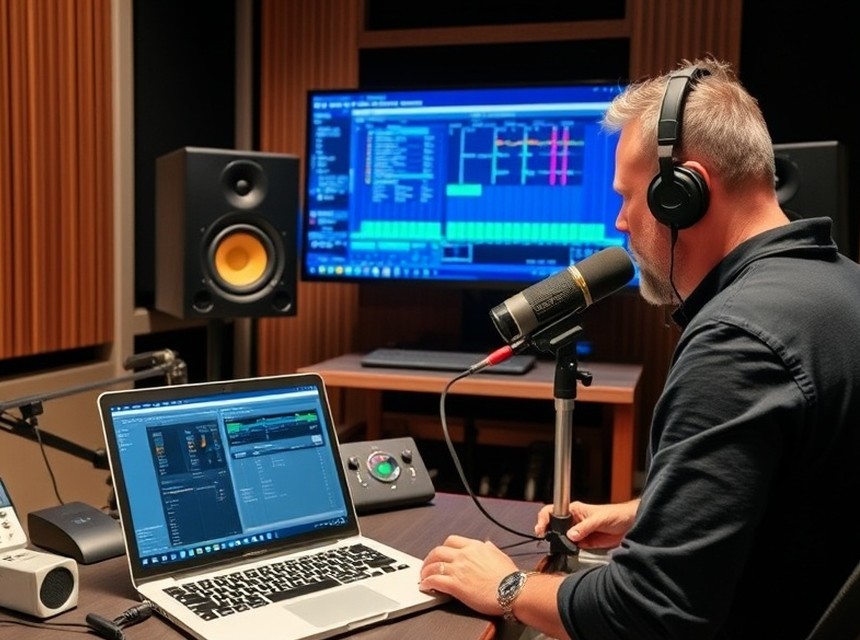
Measure, move, treat, correct
The order is not a preference; it follows from what each step can do. Moving a speaker thirty centimetres changes the bass response profoundly, and no equaliser reproduces that effect. Treating early reflections changes clarity across the band, which correction also cannot do. What remains after those three steps is precisely what electronic correction handles well. Starting at the end gives flat curves and mixes that travel badly.
A flat curve is not the objective
A perfectly flat response measured at a single point guarantees very little, because ears do not work like a measurement microphone on a stand. What matters is consistency across a small area around the listening position, symmetry between the two sides, and the absence of deep holes low down. So we show several measurements rather than one photogenic curve.